Asia Pacific Energy Research Centre
30
Years
1996 — 2026
Taking a Stand at Thirty

APERC marks 30 years of advancing energy policy and regional cooperation across the Asia-Pacific.

30th Anniversary Ceremony · Tokyo · 22 April 2026
The Ceremony

The Asia-Pacific Energy Research Centre (APERC) held its 30th Anniversary Ceremony in Tokyo on the evening of 22 April 2026 to celebrate three decades of advancing energy policy and sustainable growth across the APEC region. The anniversary ceremony, held alongside APERC’s annual conference, brought together colleagues, board members, and energy experts to celebrate APERC’s achievements and reflect on its future role in navigating an ever-shifting global energy landscape.

Established on 1 July 1996 under the APEC Energy Working Group, APERC has evolved from a modest research unit within the Institute of Energy Economics, Japan (IEEJ) into a formally independent centre serving a region that accounts for about 60 percent of global energy demand.

1996 — 2026

Four phases of growth

1996
Founded

APERC is established

Created on 1 July under the APEC Energy Working Group as a research unit within IEEJ.

1996–2006
Taking Off

A research-driven foundation

Operating as a small unit within IEEJ, APERC focused on its core publications and built its analytical base.

2007–2011
Breakthrough

First region-wide goal

After the Sydney APEC Leaders’ Meeting, the first energy-intensity reduction goal was agreed, and APERC was asked to support it through new policy cooperation.

2012–2019
Expansion

The pillars take shape

Following the St. Petersburg Energy Ministerial, data, statistics, and training functions were transferred to APERC, establishing the main pillars of its work.

2020–
New Era

Independent and renewed

APERC completed its transition to a formally independent organisation, strengthening efficiency and renewables work and launching new initiatives on the fossil energy industry and hydrogen policy.

2026
30th Anniversary

Taking a stand at thirty

APERC marks three decades of energy research, data management, and policy dialogue across the APEC region.

Remarks from the Ceremony

Voices across the decades

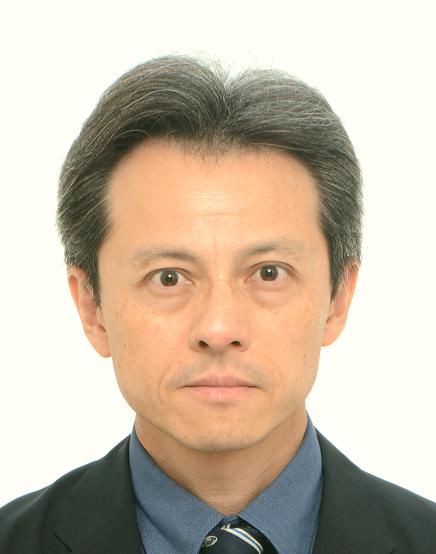
Kazutomo Irie
Chairman & President
APERC

Kazutomo IRIE

Opening Remarks
APERC Chairman & President

Distinguished APERC board members, excellent energy experts, APERC alumni and friends, my colleague researchers and staff,

It is my great honour and pleasure to host the 30th anniversary of the Asia Pacific Energy Research Centre (APERC). I would like to take this opportunity to extend my heartfelt welcome to all the participants in this event today.

On July 1st, 1996, APERC was established as an APEC regional research institute dedicated to energy economics and energy policy studies under the auspices of the APEC Energy Ministerial Meeting (EMM) through the APEC Energy Working Group (EWG).

As for APERC’s history, my colleague Mr. Mitsuhito TAKADA, Vice President of APERC, will overview this immediately after my remarks. And later, I expect Mr. Keiichi YOKOBORI, the first President of APERC, will look back upon the early days of APERC. So, for now, please allow me to indulge in my personal memories rather than official statements.

On July 1st, 1996, I was in Canberra, the capital city of the Commonwealth of Australia. In the previous month, I was temporarily transferred from the Ministry of International Trade and Industry (MITI) to the Ministry of Foreign Affairs (MOFA) to be Economic Counsellor of the Japanese Embassy in Canberra, Australia. I was busy settling down in a totally new and alien environment, but in addition, preparing for the MITI Minister, Mr. Shunpei TSUKAHARA’s visit to Australia. Minister TSUKAHARA was coming to Sydney to attend the first meeting of the APEC Energy Ministers in late August. I was heavily involved in the logistics of his visit, but not in the substance. Therefore, I have no memory of reading the ministerial meeting document.

In its seventh paragraph, the document says Ministers recognized that high quality information on regional energy supply and demand trends will provide business and government policymakers with better tools for making well-informed decisions. In this regard, Ministers welcomed the establishment of the Asia Pacific Energy Research Centre (APERC), which is located in Tokyo and managed under the guidance of the Working Group on Regional Energy Cooperation. Ministers noted that the work of the Centre will provide a valuable input to their future policy deliberations. Thus, I had a near miss with APERC in August 1996.

My first real encounter with APERC was much later. In March 2008, I retired from the Ministry of Economy, Trade and Industry (MITI) and, in April, moved to the University of Tokyo to be a Professor in charge of research and education on nuclear energy policy and laws. At the same time, I started to work for the Institute for Energy Economics, Japan (IEEJ), on a part-time basis as a Senior Research Fellow of Nuclear Energy Group. On the first day at IEEJ, I dropped in at APERC, which was an IEEJ’s affiliated centre at the time, to meet its then President, Mr. Kenji KOBAYASHI. Mr. KOBAYASHI was two-year senior to me at MITI/METI and I knew him well, so I made a courtesy call on him. I worked for two years for IEEJ on a part time basis. During these two years, I had quite few chances to visit the APERC office because, if I remember correctly, the APERC office was on the 16th floor of Inui Building Kachidoki at the time, while the IEEJ headquarters was on its 10th floor.

In 2010, I decided to quit IEEJ in order to concentrate more on research and education at the University of Tokyo. However, the Great East Japan Earthquake in March 2011 changed my plan. The University of Tokyo decided to revise its curriculum for nuclear energy research and education, and I had to leave the university in March 2012.

Fortunately for me, in the following April 2012, President KOBAYASHI kindly invited me to APERC as its General Manager of Research, which had been vacant at the time. Since then, I have been working for APERC for a total of 14 years. Six years as General Manager until 2018, seven years as President, and the last one year as Chairman and President.

APERC has been headquartered in Kachidoki, a small, reclaimed island off Tokyo Bay, not far from Ginza but not considered within downtown Tokyo. I have been in Kachidoki for 14 years, much longer than Heinrich Harrer’s seven years in Tibet, also more comfortable.

In my time here, I’ve been continuously impressed by the staff and researchers at APERC. They come with very different skills, experiences, and backgrounds, but always maintain a positive, hard-working group with a strong team culture. I have always had this wonderful team of researchers and administrative staff around me, unlike Heinrich Harrer, who was always alone in Tibet.

So, joking aside, I would like to hand over the microphone to Vice President TAKADA to review the history of APERC. Thank you for your kind attention.

Weiguo Shan
Lead Shepherd
EWG

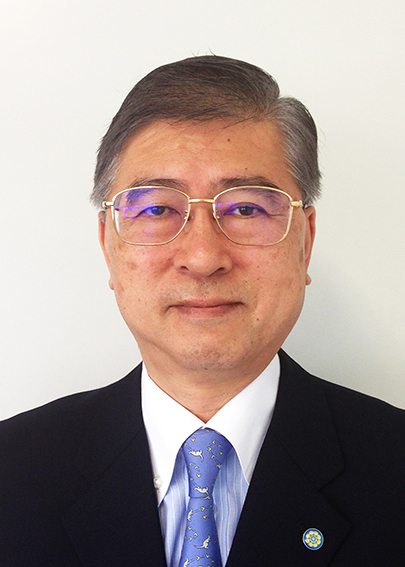
Weiguo SHAN

Congratulatory Remarks
Lead Shepherd, APEC Energy Working Group

Hello, Dear President IRIE San, Advisory Board members

Ladies & gentlemen, greetings from Beijing!

I am Weiguo SHAN, LS of APEC Energy Working Group. It is truly an honor to be invited to speak at this special event. Please allow me to express my sincere congratulations to the 30-year anniversary of the Asia Pacific Energy Research Centre. This is a milestone not only for APERC but also for EWG.

It is high time for us to recall APERC’s contributions to APEC energy affairs during the past 30 years. To me, there are at least 5 aspects of achievements APERC has made, which support APEC members to be accessible to efficient, affordable, reliable and environmentally sustainable energy supply.

Achievement No.1: APERC has supported the policy dialogue within EWG and among APEC energy ministers. APERC’s research is relevant not only to EWG strategies but also to priorities of APEC Energy Ministers. The triennial flagship publication of the APEC Energy Demand and Supply Outlook has facilitated APEC cooperation by providing policymakers with a useful reference on energy in APEC region, a data-supported review of the challenges and opportunities and a source of ideas for finding potential solutions.

Achievement No.2: APERC has promoted energy security in APEC economies. For a long time, as part of ESI and OGSI, APERC has organized 6 Oil & Gas Security Exercises (OGSE), 8 Oil & Gas Security Network (OGSN) forums, 20+ Oil & Gas Security Studies (OGSS) reports and 68 OGS Newsletters. All those activities helped promoting energy security of 21 APEC economies and APEC collectively as a whole.

Achievement No.3: APERC has supported the establishment and achievement of APEC’s energy goals. For the APEC energy intensity goal, it was APERC that first realised the original 25% reduction goal was too modest and proved a reduction of more than 40% could be possible in the same timeframe by 2035. Thus, the Goal of 45% intensity reduction was announced. To help the APEC economies achieve this goal, APERC adopted the Peer Review Programs - PREE and reviewed the energy efficiency policies of 11 APEC economies through 13 PREE projects and 8 APEC Energy Efficiency Policy (EEP) Workshops. Through those activities, the energy efficiency of APEC member economies improved.

Achievement No.4: APERC has enhanced the capacity building of EWG members. By “Know-How Transfer Program,” APERC organized 30+ energy modelling training courses, 20+ APEC Workshops on Energy Statistics, and sent experts to developing economies in the APEC region. As a result, the energy data management capacity of APEC economies improved, APEC energy data collection and dissemination network was developed. With better energy data, better energy decisions were achieved among APEC economies.

As we noticed, more and more APERC’s Policy Cooperative Activities are reframed as “capacity building workshops” (CBWs), which I believe could definitely identify common challenges, share best practices and propose new ideas or recommendations to improve the energy efficiency of the member economies and to develop new and renewable energy policies.

Achievement No.5: APERC has promoted energy cooperation and exchanges in the Asia-Pacific region. APERC’s research themes are carefully selected with criteria of high priority for the majority of member economies, relevance to other expert groups, and relevance to existing and ongoing studies in the region or in the world. Thus, APERC could have good relationship with energy thinktanks and international energy organizations. APERC workshops could invite and attract experts both from inside and outside APEC, that forged cross-fora collaborations and synergy among different parties.

All those above achievements are inseparable from the joint efforts by APERC stakeholders. Here I would like to thank Dr. IRIE san for your leadership that makes APERC so fruitful and powerful; thank you, Advisory Board members for your professional advice on APERC’s research selections and methodologies; thank you all the APERC Staff for your contributions to APERC’s insights in projects and at workshops; and thank you, Japanese government for your financial supports that facilitate all the APERC activities.

We have now arrived at a critical juncture. The global energy landscape is reshaping, with ongoing conflicts, climate change and technology innovations, adding uncertainties and challenges for us all. Balancing energy security and energy transition, demands in-depth analysis and innovative solutions. This is precisely where APERC’s role becomes absolutely vital. Your ongoing research on fossil fuel security, cleaner energy technologies, and new collective goals are exactly the kind of forward-thinking we need. The EWG counts on your expertise to help navigate this turbulent time and to develop practical pathways for APEC economies.

Finally, as APERC embarks on its next chapter, I am confident that your influence and network will grow further. The foundation you have built is solid, and your work is highly recognized. I am looking forward to the outcomes from your talented researchers in the years ahead.

Once again, my heartfelt congratulations to APERC’s 30 years of outstanding service for the APEC community. I wish you a wonderful celebration today and all the best for the future.

Thank you.

Keiichi Yokobori
First President
APERC

Keiichi YOKOBORI

Congratulatory Remarks
First President of APERC, and APERC Board of Trustees Member

Dr. Kazutomo Irie, Distinguished Advisory Board Members, dedicated Researchers, Administrative Staff, and Friends,

It is my great honour and pleasure to join you in celebrating the 30th Anniversary of the Asia-Pacific Energy Research Centre (APERC) today. I would like to take this opportunity to present my personal observations on the significance of APERC’s work and the challenges that lie ahead in its activities.

On 1 July 1996, APERC was established as a multilateral research entity under the guidance of APEC Energy Working Group (EWG). Institutionally, it was organised as an affiliated unit of the Institute of Energy Economics, Japan (IEEJ). However, both APERC’s research activities and administrative arrangements had to be built from the ground up, particularly the recruitment of qualified researchers.

However, I was fortunate that many EWG representatives and researchers were already friends and colleagues from my earlier career at the International Energy Agency (IEA), World Energy Council (WEC), and International Association for Energy Economics (IAEE). Thanks to their advice and support, APERC was able to attract many talented researchers.

To ensure that APERC receive high level of advice from experts in the APEC region, the APERC Advisory Board was established. Today, I am pleased to see that APERC has earned recognition among global energy specialists as a reliable source of energy-related economic research.

One of the challenges APERC faced in its early days was the task of delivering an APEC regional energy outlook within just a year and a half. This deadline imposed by the EWG seemed nearly impossible in the eyes of many APERC researchers. Yet Dr. Ji-chul Ryu, then Vice President, brought remarkable energy and talent to the effort and successfully carried out this Herculean task. Thanks to the dedicated contribution of APERC researchers, the APERC energy outlook has since evolved into APERC’s flagship publication.

On this occasion, I would like to underscore the uniqueness of the APERC energy outlook. First, it is a product of joint analytical exercise by researchers from across the APEC region. Second, it presents a detailed picture for each individual APEC economy. By contrast, publications such as the IEA’s World Energy Outlook and the US Energy Information Administration’s International Energy Outlook present global and regional perspectives, but do not offer an economy-by-economy analysis.

Given that APEC comprise economies with diverse economic, social and cultural backgrounds, the economy-specific breakdown offered by the APERC outlook is particularly valuable for decision makers in both business and government sectors throughout the region. On this account, the participation of researchers in preparing the APERC outlook is very essential.

At the same time, I would like to offer a word of caution on the nature of APERC Outlook. Fundamentally, the outlook is not a prediction, but rather a scenario-building exercise based on a set of assumptions, including those related to policy options. However, it does present a plausible future that is logically consistent with its underlying assumptions. It also highlights many important and thought-provoking policy issues.

What I have just emphasized is of course nothing new to you. Nevertheless it is worth repeating, as the Outlook is often misunderstood by those who may interpret it as a definitive forecast rather than a structured scenario.

Following the completion of the initial APERC energy outlook, APERC embarked on a series of energy policy-related research projects that reflected the priorities of the majority of member economies. These projects were particularly shaped by the perspectives expressed by APEC Energy Ministers and the EWG.

I would also like to emphasize the value of APERC’s energy policy-related research projects. Unlike the European Union, APEC does not aim economic integration. However, APEC economies frequently face similar energy policy challenges. A recent example is the turbulence in the oil and gas markets, triggered by the US-Iranian conflict. The near closure of the Strait of Hormuz disrupted global oil and gas markets, regardless of each economy’s direct dependence on Gulf oil. Prices of crude oil produced outside the Middle East such as WTI, sharply increased, demonstrating the high degree of global market integration in oil and gas.

Despite the diverse economic, social and cultural backgrounds of APEC economies, they share common exposure to the severe impacts of oil and gas supply disruptions. Studying these differing impacts and policy options across APEC economies can foster a shared understanding of the issues and potential responses. For instance, an early APERC study on emergency oil reserves, which I took part in, highlighted the value of jointly held emergency oil stocks. In my view, in a globally integrated oil market, coordinated stock drawdowns by several economies could partially offset regional and global supply losses. Thus, the release of emergency oil reserves could benefit all oil importing economies.

Besides oil stocks, I am also interested in the development of oil and gas pipelines as well as power grid interconnections in the region. Such infrastructure have been well developed in Europe and North America. Building APEC-wide energy logistic infrastructure connections could be beneficial for APEC economies in light of growing energy demand.

On 1 July 2019, APERC was reorganised as an independent Japanese legal entity, separated from IEEJ. It allowed APERC to streamline its research activities, while it maintains cooperation with IEEJ. With this institutional change, I became a member of the APERC Board of Trustees. In that capacity, I regularly receive APERC’s activity reports. I would like to offer some brief comments on the current APERC activities.

In comparison with the initial stage, APERC activities now cover wider activities, which include, Energy Data Network Service, Know-How Transfer Programme, and Policy Cooperative Activities. Energy Data Network Service and Know-How Transfer Programme had been carried out by the Energy Data and Modelling Centre (EDMC) and International Cooperation Department of IEEJ, respectively, before the creation of APERC. However, APERC was somehow involved in them, particularly, the compilation of reliable energy database, on which APERC outlook analyses are based. More specifically, Dr. Kenichi Matsui of EDMC was the chair of the EWG’s Expert Group on Energy Data and Analysis, which supervised the work of APERC. Furthermore, I had held the position of IEA’s Office Director of Information and Emergency Systems Operations, under which Energy Statics Division was placed, between 1985 and 1989. During that period, IEA started the publication of the non-OECD Energy Statistics. Thus, I recognised the need of division of work among regional and international organisations for a common set of worldwide energy statistical data. I discussed this idea with IEA, which eventually led to the creation of the Joint Organizations Data Initiative (JODI). However, when APERC’s first Energy Outlook was produced, it was based on the IEA’s energy statistics, which was at that time, the most consistent energy database.

On the Know-How Transfer Programme, APERC saw its value in strengthening the capacity of regional energy researchers. The program offered them the foundation for analytical work while fostering mutual understanding of policy options or implementation strategies. I expect these activities will open broader opportunities for energy policy cooperation.

With regard to Policy Cooperative Activities, APERC lacked the resources to implement them just after its establishment. However, based on my personal experience as Head of IEA’s Country Studies Division, peer-review exercises are very useful tools to deepen each economy’s energy policy options. The purpose of this is not an exchange of criticisms against member economies’ energy policies. This should be regarded as a process of deepening mutual understanding of energy policy options and identifying differing perspectives. Each economy chooses its own policies under budgetary and human resources constraints. Other economies’ differing choices could be regarded as a kind of differing policy simulations. Each economy is free to choose its own policy, but other economies’ experiences and viewpoints could offer fresh insights and provide more effective and reasonable options.

In closing, I am pleased to witness the widening role of APERC in advancing collaborative energy research activities across the region and strengthening energy policy cooperation. At the same time, I firmly believe that APERC’s continued delivery of high-quality research depends on the dedication and expertise of capable researchers. I therefore take this opportunity to appeal to APEC EWG members to support APERC by continuing to nominate and recruit talented Visiting Researchers from your economies.

Thank you for your kind attention and patience.

Cary Bloyd
Former Advisory
Board Member
(USA)

Cary BLOYD

Congratulatory Remarks
Former APERC Advisory Board Member, USA

First, I’d like to just thank Dr. Irie for inviting me to be here and to see all my APEC colleagues again. I am very pleased to be here to congratulate APERC for its 30-year anniversary of supporting APEC. My perspective comes not only from my work with APERC on the advisory board but also from my work with APEC over many years.

My work with APEC actually started a number of years even before APERC was founded, in 1988. I was working at Argonne National Laboratory and led the electricity sector of the first congressionally mandated greenhouse gas reduction study for the US. It was my work on that that had our laboratory management ask me if I wanted to go to Hawaii to better understand the energy usage in Asia, because they understood that if we were truly interested in reducing greenhouse gases for the world, we needed to understand Asia better. In 1992, I worked with USDOE to actually start the APEC Expert Group on Energy Efficiency and Conservation with an initial meeting in Hawaii.

Thinking back on that, my congratulations come across three areas: the APERC staff, METI, and APERC leadership.

To the APERC Staff: I think I understand better than most what it means for you to be here. When I was asked to go to Hawaii, I asked two people who had done two-year stints there what they thought. They said they enjoyed Hawaii, but it was the ‘worst career decision they’d ever made’. As APERC staff, you are thousands of miles away from your home institutions, putting your career path on hold for an undefined future. You did it because you wanted the excitement and interest of doing something new, and I truly congratulate you for that unusual and important decision.

To METI: Over 35 years, I have realized the difficulty of a government agency funding an institution for 30 years across different administrations. When new administrations come in, the priorities of the last one often change, and high-level policymakers often feel taxpayer dollars should only support their own domestic economy. METI has been able to maintain this support for 30 years, which is an important and impressive feat in my experience with governments.

To APERC Leadership: I have known all the APERC presidents over its 30 years and admire the job they have done. They have succeeded in maintaining a high-quality staff by convincing researchers to take a chance on working in Japan. They have also successfully coordinated with METI as leadership there changes every few years, making the case for why APERC is important to Japan and the region, even during recessions when funds are often cut.

Finally, the leadership has worked with the EWG to continually adjust research areas to maximize impact. A major metric for success is that in recent years, APERC has a seat and a presentation at the APEC Energy Ministerial. This is a ‘pretty big deal’ because it provides access to high-level people who control 60% of the world’s energy. It shows the value the EWG gives to APERC and provides young researchers an amazing audience for their work.

In conclusion, I congratulate the multi-economy APERC staff for their time, METI for their continual support, and Dr. Irie for representing the presidents through the years for a job well done. I wish you all the best for what will be a challenging but very interesting APEC energy future. Thank you.

Yoshiomi Yoshino
METI
Japan

Yoshiomi YOSHINO

Congratulatory Remarks
EGCFE Chair / Director, International Affairs Division, Ministry of Economy, Trade and Industry (METI), Japan

Good evening, everyone. On behalf of METI, I’d like to say a few words for congratulatory remarks. It is a great pleasure to offer my heartfelt congratulations on the 30th anniversary of APERC. Over the past three decades, APERC has made remarkable contributions to advancing energy policy and promoting sustainable growth in the Asia-Pacific region. I’d like to express my deepest respect for these enduring achievements.

APEC has promoted cooperation that complements the multilateral free trade system while respecting the voluntary and non-binding nature of its framework. In this context, APERC was founded in 1996 to strengthen the intellectual foundation of energy policy in the region through sectoral cooperation. For Japan, a country with limited domestic energy resources, international cooperation in the field of energy policy is essential.

The Japanese government has strongly supported APERC activities since its inception. Since its establishment, APERC has consistently addressed the challenges faced by APEC economies by providing high-quality analysis and policy-relevant insights across a broad range of fields, including energy supply and demand outlooks, energy security, energy efficiency, and decarbonization. APERC’s neutral and evidence-based research has earned strong recognition as a trusted foundation for energy policy discussion, establishing itself as a key knowledge hub in this region.

Over the past 30 years, the global energy landscape has undergone profound changes. Increasing uncertainty in energy markets, heightened geopolitical risks, accelerating responses to climate change, and rapid technological innovation have further complicated energy-related challenges. Despite these challenges, APERC has effectively responded to the needs of the time by supporting dialogue and cooperation in the region through timely and rigorous analysis. This sustained effort has become an essential pillar of energy cooperation within APEC.

In particular, the APERC approach of respecting the diverse circumstances of individual economies while promoting constructive and voluntary dialogue with an eye on the future has become increasingly important in today’s world, where the risk of fragmentation is growing. APERC’s longstanding commitment to capacity building and knowledge sharing, including developing the future generation of energy experts, represents a significant contribution to the region’s long-term resilience and prosperity.

As APERC marks this important milestone, I sincerely hope it continues to build on its strong foundation of trust and accomplishment, further strengthening its role as an intellectual leader in the energy field in line with APEC guidance. I look forward to a continuous contribution towards a sustainable, resilient, and prosperous future for the Asia-Pacific region. The Japanese government remains committed to supporting APERC activities. In closing, I wish APERC every success in the years ahead and extend my best wishes for the health and continued achievement of all those who have supported and worked with APERC. Thank you very much.

30

“At age thirty, I took my stand.”

— the Analects of Confucius

Citing this passage, Dr. Irie affirmed that APERC now stands with confidence and purpose. Its continued progress depends on close cooperation with advisory board members, energy experts, alumni, and partners across the APEC region. Here is to the next thirty years.