ESTO Conducted the 2026 Short Term Energy Statistics Training Course in Tokyo
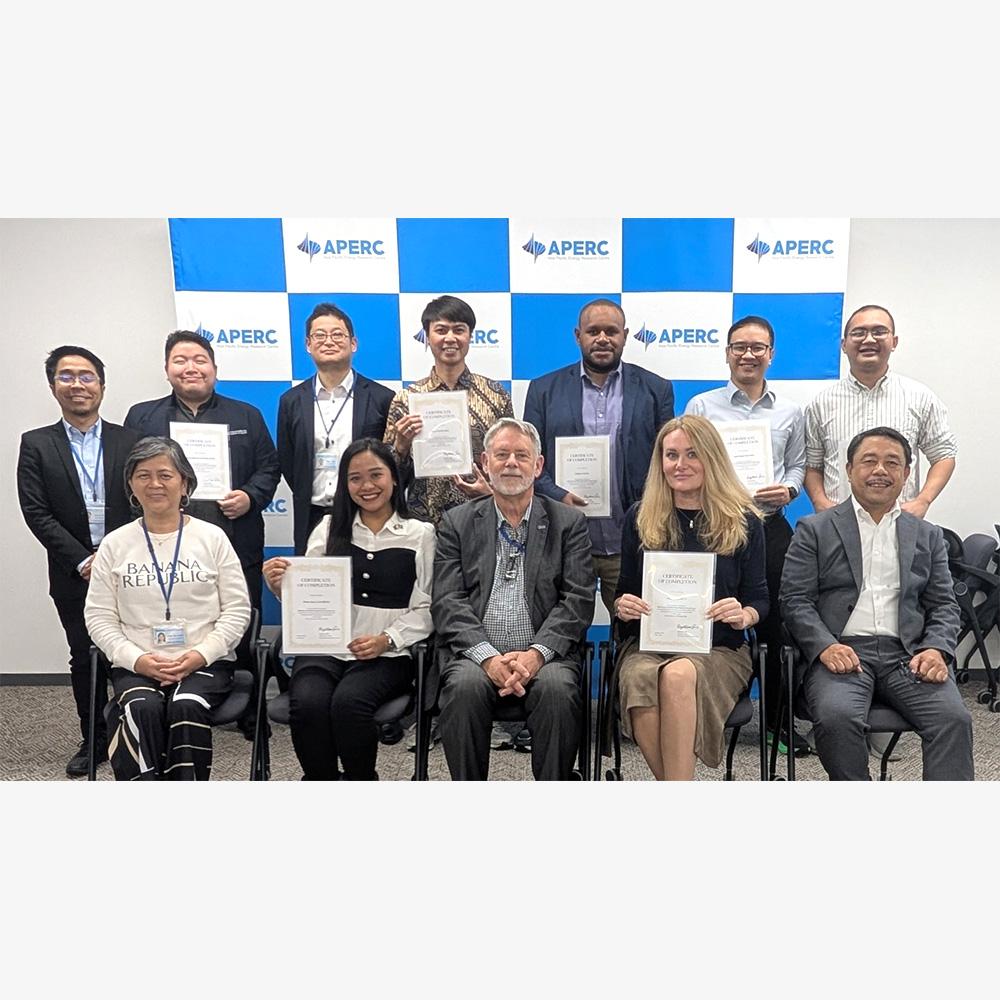
Tokyo, Japan – 4 February 2026 – The Energy Statistics and Training Office (ESTO) successfully conducted the 2026 Short-Term EGEDA Energy Statistics Training Course from January 19 to 30, 2026, at the APERC office in Tokyo, Japan. This year, seven participants from six economies (Indonesia, Papua New Guinea, the Philippines (2), Russia, Thailand, and Viet Nam) attended the training course.
The training course aimed to strengthen participants’ capabilities in energy statistics and enhance the reliability of the APEC energy database. In turn, this supports the development of sound energy policies and informed decision making within their respective economies. Overall, the program contributes to analysing current and future energy trends and advancing APEC’s shared goals, such as reducing energy intensity and doubling the share of renewable energy.
The short-term training course covered topics such as the energy balance table, data collection approaches, GHG emissions calculations, energy efficiency indicators, and decomposition analysis. Additional topics included estimating end use energy consumption using survey data and completing the JODI Oil and Gas questionnaire. The lectures provided participants with foundational knowledge, followed by hands on exercises simulating real data processing tasks to produce usable datasets.
During the feedback session, several participants mentioned that their understanding of the energy balance table had greatly improved and that they now appreciated its importance despite the challenges in ensuring completeness. Others highlighted the need to strengthen coordination among relevant agencies, improve data consistency across sources, and further enhance transparency in data collection and reporting processes. Participants also noted that units must be handled carefully during data collection and use.
In addition, the participants expressed appreciation for learning about the energy situations of other economies and hoped that more economies would join future sessions. Several also mentioned that while they gained valuable knowledge, further consultations and technical support from ESTO would be beneficial. The ESTO team responded positively to this suggestion.